
- A boil that does not improve or keeps returning may need medical evaluation, especially if it is large, very painful, or associated with fever.
- Warm compresses, gentle hygiene, and avoiding squeezing can help reduce irritation, but they are not a substitute for care when warning signs appear.
- Recurrent boils can sometimes point to factors such as friction, shared germs in the household, or a condition that makes skin infections more likely.
A boil is usually a painful, swollen bump that forms when a hair follicle or nearby skin becomes infected. Many boils improve on their own, but a boil that keeps coming back, grows slowly, does not drain, or seems to linger for more than expected deserves closer attention. Persistent boils can be frustrating because they may reflect ongoing skin irritation, repeated bacterial exposure, an underlying skin condition, or a medical issue that affects healing. The goal is not to guess at the cause, but to notice patterns, avoid making the area worse, and know when professional evaluation is the safer next step.
What a persistent boil can mean
A single boil often starts as a tender red bump and then becomes firmer, larger, and more painful as pus collects under the skin. If it persists, several possibilities come into play. The area may not be draining well, or the infection may be deeper than it first appeared. In some cases, what looks like one boil is actually a cluster of infected follicles or a larger abscess.
Persistence can also happen when the skin keeps getting irritated. Tight clothing, shaving, sweating, friction, or repeated touching can keep the area inflamed. Some people also have repeated exposure to bacteria through close contact, shared towels, sports equipment, or household surfaces. Even when the cause seems simple, a boil that lingers should not be assumed to be harmless.
Another reason to pay attention is that some bumps are not boils at all. An inflamed cyst, an insect bite with secondary irritation, or another skin lesion may resemble a boil at first. If it does not follow the usual pattern of a boil, or if it changes in an unusual way, a clinician can help sort that out.
Common reasons a boil may keep coming back
Recurrent boils often have more than one cause. In many cases, they are related to bacteria entering through small breaks in the skin. That can happen easily when skin is rubbed, shaved, scratched, or exposed to moisture for long periods. Areas such as the neck, underarms, buttocks, thighs, and groin can be especially vulnerable because of friction and sweat.
A few patterns are worth noting:
- Repeated friction from clothing, exercise, or body folds
- Shaving or other hair removal that irritates the skin
- Poorly drained boils that never fully clear
- Close contact with someone who has recurring skin infections
- Shared towels, bedding, or athletic gear that may spread bacteria
- Skin conditions that damage the barrier, such as eczema or frequent scratching
Sometimes a boil returns because the bacteria remain on the skin or inside the nose and are reintroduced later. That does not mean the person is doing anything wrong; it means the skin barrier and hygiene routine may need more attention.
If boils happen often in the same places, it is also important to consider whether the pattern fits hidradenitis suppurativa, a long-term inflammatory skin condition that can cause painful lumps in areas where skin rubs together. It can be mistaken for recurrent boils, so repeated episodes deserve a careful look.
Signs that the problem is more than a simple boil
A boil can sometimes be managed at home for a short time, but certain features suggest that it may need medical care sooner. The location, size, and behavior of the bump matter. So do the surrounding symptoms.
Seek prompt evaluation if the boil:
- Is getting larger instead of smaller
- Becomes much more painful, hard, or swollen
- Has redness that spreads beyond the bump
- Is on the face, spine, near the eye, or in the groin or armpit and is worsening
- Drains foul-smelling pus repeatedly or never seems to empty
- Is accompanied by fever, chills, fatigue, or feeling unwell
- Appears with red streaks or swollen lymph nodes
- Keeps returning in the same place
- Occurs in someone with diabetes, immune suppression, or poor wound healing
These signs do not automatically mean something dangerous is happening, but they do suggest that the infection or inflammation may be more extensive than it first looked. In those cases, draining the area or prescribing treatment may be considered by a qualified clinician.
One especially important point: do not squeeze, puncture, or try to cut open a boil at home. That can push infection deeper, increase scarring, and raise the risk of spreading bacteria to surrounding skin.
Practical home care while you watch it closely
When a boil is small and there are no warning signs, simple care can sometimes help it open and drain on its own. The main goal is to reduce irritation and support natural drainage without forcing it.
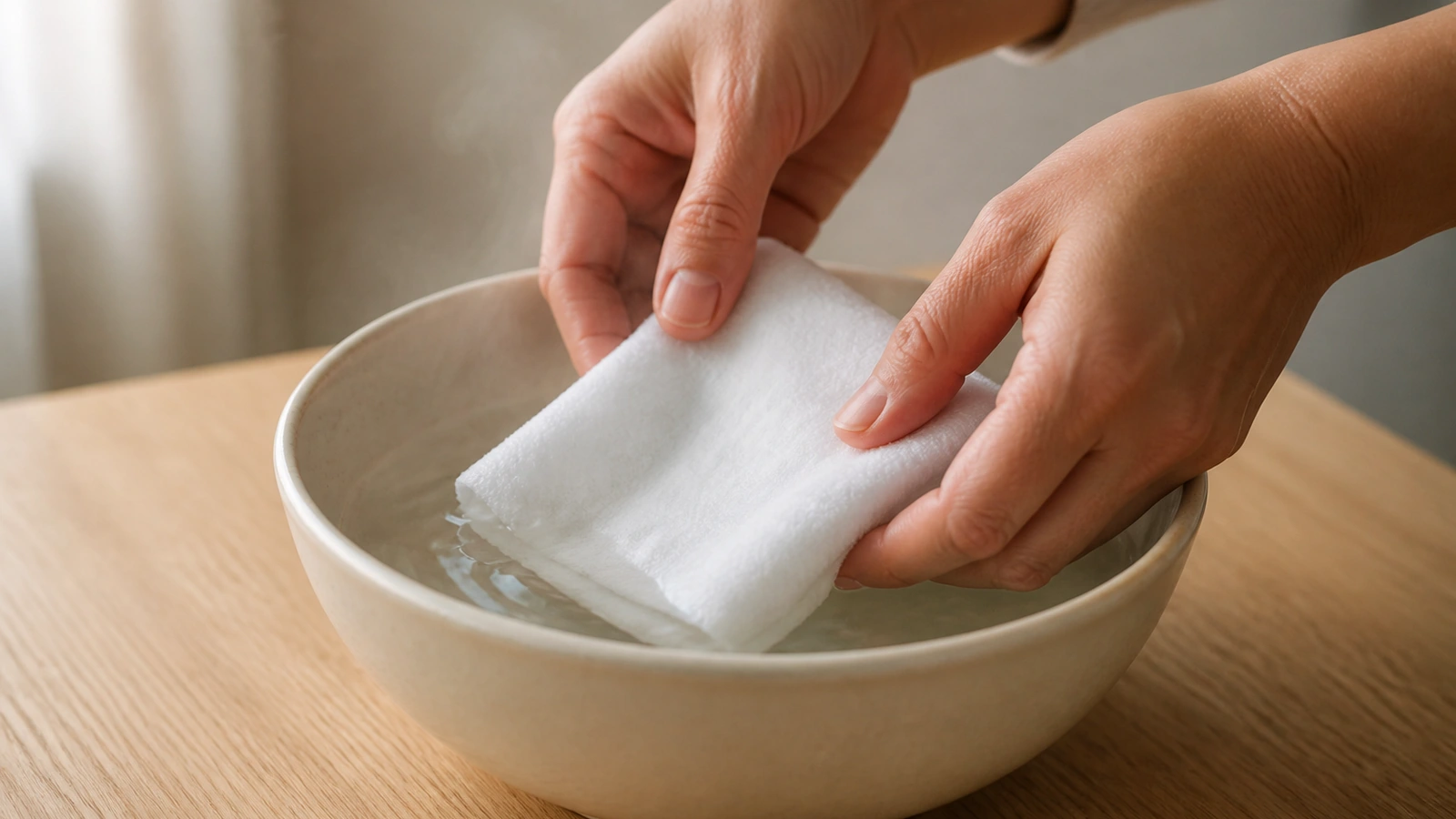
Warm compresses are usually the most useful at-home step. A clean warm, not hot, cloth applied for about 10 to 15 minutes at a time may help ease discomfort and encourage drainage. The cloth should be clean each time to avoid spreading bacteria.
Other helpful steps include:
- Keep the area clean with gentle soap and water
- Wash your hands before and after touching nearby skin
- Cover the boil with a clean dry dressing if it is draining
- Change underwear, socks, or workout clothes after sweating
- Avoid shaving over the area until it heals
- Wear loose, breathable clothing to reduce rubbing
- Do not share towels, razors, or washcloths
These measures are supportive, not curative. If the boil is not improving within a reasonable period, or if it is clearly worsening, home care should stop being the only plan. Persistent boils can need drainage, culture, or additional treatment based on what the clinician finds.
It is also wise to avoid home remedies that irritate the skin, such as harsh scrubs, alcohol, or strong essential oils directly on the bump. “Natural” does not always mean gentle, especially on already inflamed skin.
Why repeated boils deserve a broader health check
When boils recur, the issue may be less about the individual bump and more about the conditions that let them form. That is why a broader health check can be useful. A clinician may ask about timing, location, shaving habits, exercise, friction, close contacts, and whether similar infections happen in the household.
Some people are more likely to develop persistent or recurrent skin infections because of factors that affect immunity, circulation, or healing. Diabetes can be one example, but it is not the only one. Medications that suppress the immune system, smoking, skin folding, obesity, or chronic skin irritation may also play a role. These are not guarantees of infection; they are simply factors that can make skin less resilient.
A clinician may also decide whether the lesion needs to be drained, whether a sample should be tested, or whether there is a pattern suggesting another diagnosis. That can help prevent repeated cycles of temporary improvement followed by another flare.
If boils are frequent, it may help to keep a basic record of where they happen, how long they last, and what seems to trigger them. That information can make the visit more productive without needing to self-diagnose.
When to seek care right away
Some situations call for faster medical attention rather than waiting to see whether the boil settles. This is especially true when infection may be spreading or when the person is more vulnerable to complications.
Seek urgent care if:
- The person has fever, shaking chills, or feels significantly ill
- The redness is spreading quickly
- The boil is near the eye or on the face and worsening
- There is severe pain or swelling
- The area becomes numb, dusky, or hard in an unusual way
- There are red streaks extending from the boil
- The boil is in a child, older adult, or someone with a weakened immune system and is not improving
- The person has diabetes and the skin infection is getting worse
- There are multiple boils at once or a rapidly enlarging area of tenderness
If breathing problems, confusion, or signs of severe illness occur, emergency care is appropriate. Those symptoms are not typical of a simple boil and should not be waited out.
For a persistent boil that is not an emergency but is not improving, a primary care clinician, urgent care provider, or dermatologist can help decide whether drainage, testing, or prescription treatment is needed. The right timing depends on symptoms and risk factors, but persistent pain and poor healing should not be ignored.
A boil that lingers is your body’s way of signaling that something about the situation is not resolving cleanly. Careful observation, gentle hygiene, and avoiding manipulation can help in the short term, but repeated, enlarging, or painful boils should be evaluated so the underlying cause can be addressed and the skin can heal more reliably.